Professional Roof Fixing Guide: How to Secure Your Brisbane or Gold Coast Home Against Storms
The sight of a fresh water stain spreading across your ceiling or the sound of a persistent drip during a sudden Queensland downpour is enough to make any homeowner’s heart sink. In Southeast Queensland, our roofs endure some of the most punishing weather in the country, from the scorching summer sun to ferocious storm cells carrying damaging winds and torrential rain. When your home’s primary shield is compromised, swift and professional roof fixing is not just about stopping a leak—it is about preserving the structural integrity and value of your entire property.
This comprehensive guide breaks down the essential aspects of professional roof fixing for tile and metal roofs in the Brisbane and Gold Coast regions. We explore how local weather patterns uniquely damage different roof substrates, the critical variables that determine repair scopes, and how local experts like RoofShield deliver durable, storm-ready solutions.

The Subtropical Challenge: Why Southeast Queensland Roofs Need Specialist Care
The Brisbane and Gold Coast regions experience a unique subtropical climate characterized by intense ultraviolet (UV) radiation, high humidity, and severe seasonal storms. This combination accelerates the natural weathering of roofing materials, but it affects metal and tile roofs in completely different ways.
Metal Roofs: Thermal Expansion and Contraction
Metal roof sheets are highly sensitive to temperature changes. Under the intense Queensland sun, steel sheets expand significantly, and then contract rapidly when cooled by a sudden afternoon storm. This constant, daily cyclic movement puts immense physical stress on the fasteners, gradually loosening screws and degrading the protective rubber EPDM washers, which eventually leads to leaks.
Tile Roofs: Porosity and Moisture Absorption
For tile roofs, heat is not the primary driver of movement and mortar stress. Instead, the issue lies in moisture absorption. Over decades of exposure to UV rays and rain, the original protective glaze on concrete tiles wears away, leaving the concrete highly porous. During heavy rain, these unsealed tiles absorb massive amounts of water. The sheer weight of this absorbed moisture causes the roof structure to slightly sag or “droop.” Once the rain stops and the tiles dry out, they spring back to their original shape. This cyclic drooping and springing back places immense structural stress on the cement bedding and flexible pointing mortar holding the ridge caps in place, causing it to crack, crumble, and fail.
“In Southeast Queensland, a roof is not a static structure. While metal roofs expand and contract due to thermal changes, tile roofs experience cyclic movement from moisture absorption. When unsealed tiles absorb water, they gain substantial weight, causing the roof to slightly droop and then spring back as they dry. This constant physical shifting is what cracks the ridge mortar, making professional sealing and maintenance vital.”
Early Warning Signs: When to Call a Roof Fixing Specialist
Many homeowners ignore minor issues until they escalate into major, expensive disasters. Spotting the signs of a compromised roof early can save you thousands of dollars in secondary water damage to your ceilings, insulation, and electrical systems.
Interior Indicators of Roof Damage
- Water Stains: Active leaks typically appear as brownish, damp puddles on your plasterboard. Dried, older leaks leave a distinct dark ring around the edge.
- Mould and Mildew: Persistent dampness in ceiling corners or along walls suggests water is bypassing your roof’s sarking or tiles.
- Spiking Energy Bills: If your roof’s insulation has become wet due to a slow leak, its thermal efficiency drops dramatically, forcing your air conditioner to work harder.
Exterior Indicators (Visible from the Ground)
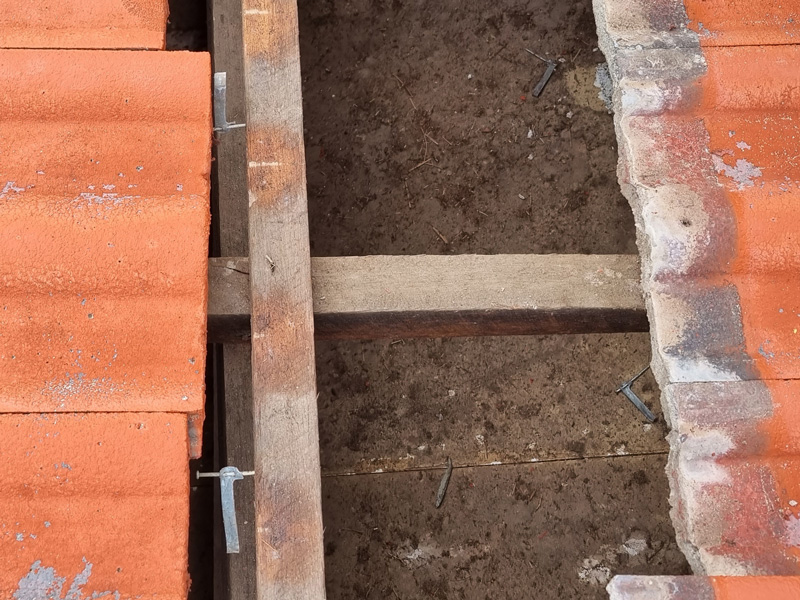
- Cracked or Missing Tiles: Even a single chipped tile creates a direct path for rainwater to rot your timber battens.
- Peeling Paint or Rust: On Colorbond or metal roofs, flaking paint or surface rust spots compromise the protective steel coating and can quickly eat through the sheet.
- Crumbling Ridge Pointing: Visible gaps or chunks of mortar falling from your ridge caps indicate that the tiles are moving and are no longer watertight.
Tile vs. Metal: Common Roof Fixing Methods
Because Brisbane and Gold Coast homes feature a mix of classic tile and modern metal roofs, professional roof fixing requires distinct techniques and materials for each system.
1. Tile Roof Fixing Techniques
- Tile Replacement: Damaged, cracked, or porous tiles are carefully extracted and replaced with matching profiles to maintain both the visual appeal and watertight seal of the roof.
- Re-bedding and Re-pointing: The mortar (bedding) holding your ridge caps in place naturally cracks due to tile moisture movement. Professionals remove the old, brittle mortar and apply a modern, flexible acrylic pointing compound that moves with the building and resists cracking.
- Valley Iron Replacement: Roof valleys channel massive volumes of water during heavy downpours. If the underlying metal valley irons rust or become choked with debris, water will back up under the tiles and flood your ceiling cavity.
2. Metal and Colorbond Roof Fixing Techniques
- Screw Replacement: Loose, rusted, or poorly driven screws are replaced with high-quality, Class 4 or Class 5 corrosion-resistant fasteners equipped with durable EPDM rubber washers to ensure a perfect, watertight seal.
- Flashing Repairs: Lead or metal flashings around chimneys, skylights, and valleys are high-risk leak zones. These are reshaped, secured, and sealed using premium, UV-stable polyurethanes.
- Sheet Replacement: When rust or storm impact damages a metal panel beyond localized repair, the entire sheet is replaced to restore the continuous protective barrier of the roof.
Why Flat-Rate Roof Fixing Quotes are Misleading
A common mistake homeowners make is looking for a simple “flat-rate” price online for roof repairs or fixing. In professional roofing, flat-rate pricing is highly misleading because no two roofs are identical. Every property presents a unique set of variables that dictate the actual scope of work and safety requirements.
Key Variables That Determine Roof Fixing Costs:
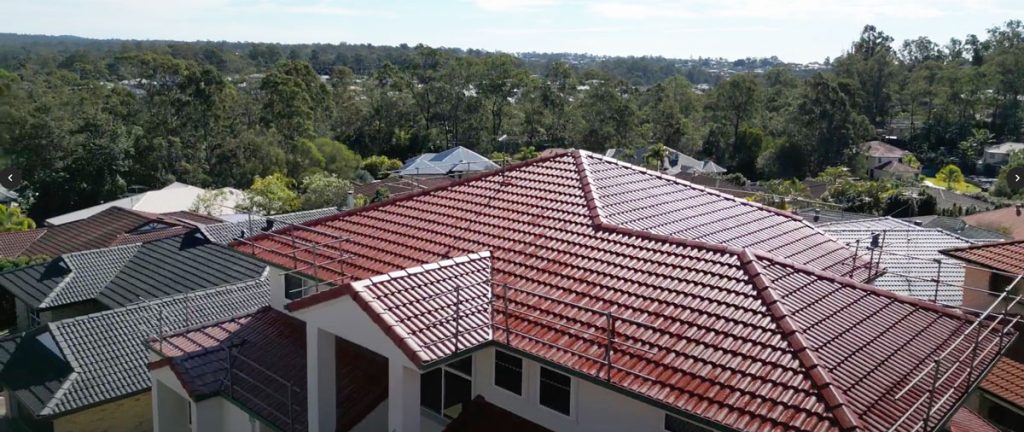
- Roof Size and Layout: The overall square meterage is only one part of the equation. A roof with multiple hips, valleys, gables, and ridges requires far more detail work and materials than a simple gabled roof.
- Building Height and Storeys: Under Queensland Work Health & Safety (WH&S) regulations, any roof work performed at heights requires strict safety measures. Multi-storey homes require edge protection safety rails, scaffolding, or even specialized boom lifts, which affect setup costs.
- Roof Pitch and Slope: Steeply pitched roofs (over 30°) require tradespeople to work using safety harnesses and ropes. This slows down the pace of work significantly and requires specialized rigging.
- Degree of Deterioration: A roof with a single localized leak requires a very different approach compared to a roof suffering from widespread structural timber rot, advanced rust, or severely perished tile mortar.
- Tile Substrate Type: Concrete tiles and terracotta tiles require completely different handling, primers, and replacement sourcing.
- Access Obstacles: Tight property boundaries, steep blocks, overhead powerlines, or delicate landscaping can restrict access, requiring manual material handling or specialized hoisting equipment.
Because of these variables, a professional roofer must conduct an on-site physical inspection to provide an accurate, guaranteed fixed-price contract. Attempting to quote over the phone or via a flat-rate sheet almost always leads to unexpected extra charges or compromised workmanship.
The RoofShield Professional Process
At RoofShield, we do not believe in quick, temporary patches that fail during the next storm. Our experienced team follows a structured, safety-first process to ensure every roof fixing job stands the test of time:
- Comprehensive Roof Health Assessment: We perform a thorough physical inspection of your entire roof, documenting our findings with clear photographs so you can see exactly what needs attention.
- Detailed, Transparent Quote: We provide an itemized proposal explaining the necessary repairs, safety setups, and recommending the best materials for your specific roof type.
- Professional Workmanship: Our fully licensed and insured tradespeople execute the repairs using premium, Australian-made materials designed to withstand the harsh Queensland climate.
- Site Clean-up and Final Inspection: We complete a meticulous clean-up of your property, including a magnetic sweep for metal fragments, followed by a final inspection to guarantee our work is watertight.
Frequently Asked Questions (FAQ)
How do I know if my roof needs a minor repair or a full restoration?
If your roof is relatively young and has isolated damage (such as a few cracked tiles from a fallen branch or a single leaking flashing), a targeted roof fixing is the smartest choice. However, if your roof is over 15-20 years old and shows widespread wear, porous tiles, or crumbling mortar across multiple sections, a full roof restoration is a more cost-effective, long-term investment.
Can I fix a leaking roof myself?
We strongly advise against DIY roof repairs. Working at heights carries significant safety risks, and incorrect repair techniques—such as using cheap silicone on porous tiles—often mask the problem while allowing water to continue rotting your roof’s timber structure. Professional roofers are trained in safe work practices and use trade-only materials.
Are your roof fixing services covered by a warranty?
Yes! At RoofShield, we back our workmanship and premium materials with comprehensive warranties. A professional roof restoration, for example, comes with a 10-year warranty on both the coatings and the workmanship, giving you complete peace of mind through every storm season.
Ready to protect your home? Contact Roofshield today for a free, no-obligation quote and expert advice on professional roof fixing for your Brisbane or Gold Coast home. With over 19 years of experience and thousands of satisfied customers across Queensland, we’re here to help you make the best choice for your home.
How do I know if my roof needs a minor repair or a full restoration?
If your roof is relatively young and has isolated damage (such as a few cracked tiles from a fallen branch or a single leaking flashing), a targeted roof fixing is the smartest choice. However, if your roof is over 15-20 years old and shows widespread wear, porous tiles, or crumbling mortar across multiple sections, a full roof restoration is a more cost-effective, long-term investment.
Can I fix a leaking roof myself?
We strongly advise against DIY roof repairs. Working at heights carries significant safety risks, and incorrect repair techniques—such as using cheap silicone on porous tiles—often mask the problem while allowing water to continue rotting your roof’s timber structure. Professional roofers are trained in safe work practices and use trade-only materials.
Are your roof fixing services covered by a warranty?
Yes! At RoofShield, we back our workmanship and premium materials with comprehensive warranties. A professional roof restoration, for example, comes with a 10-year warranty on both the coatings and the workmanship, giving you complete peace of mind through every storm season.
Ready to protect your home? Contact Roofshield today for a free, no-obligation quote and expert advice on professional roof fixing for your Brisbane or Gold Coast home. With over 19 years of experience and thousands of satisfied customers across Queensland, we’re here to help you make the best choice for your home.