Roof Repointing in Brisbane: Warning Signs Your Ridge Capping Needs Attention
Cracked or missing material along the ridge of a tiled roof deserves attention, even when there is no ceiling stain. Roof repointing renews the exposed pointing around ridge caps, but it is only suitable when the underlying bedding and caps are sound and the fixing arrangement is appropriate.
If you have noticed gaps, displaced caps or fragments falling from the roof, contact Roofshield for a roof assessment. We can assess whether your Brisbane home needs repointing, rebedding or another repair. Keep clear of loose components and do not touch or test them.

Separated or missing pointing is a reason to arrange a professional ridge-capping assessment.
What bedding and pointing actually do
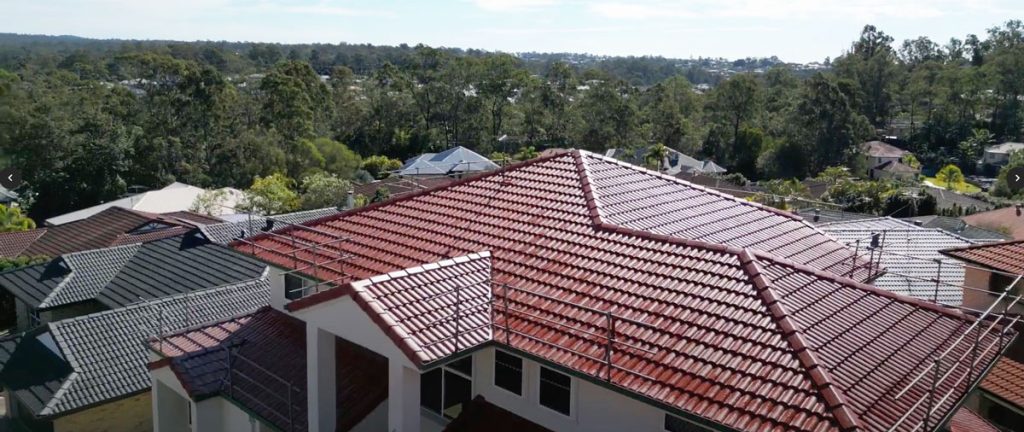
Ridge caps cover the junction at the peak of a tiled roof. Similar capping runs along the hips, where sloping roof faces meet.
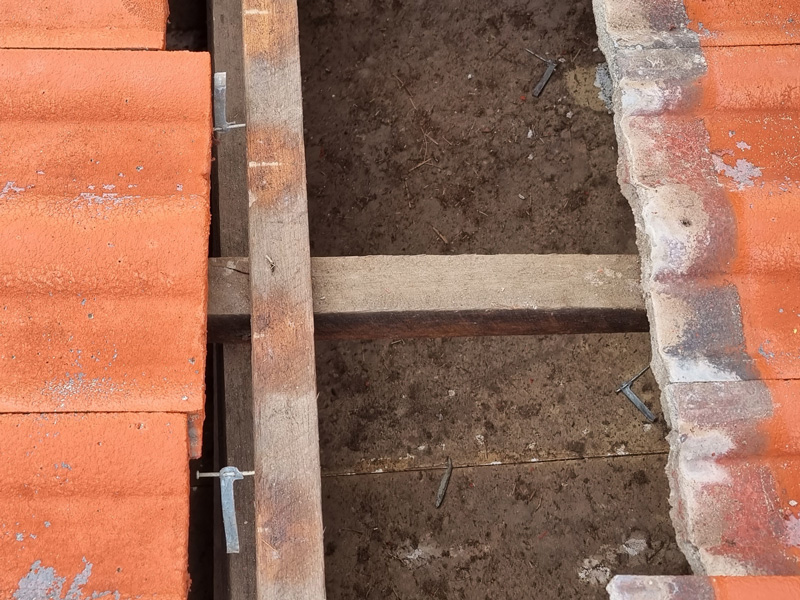
On a mortar-bedded roof, bedding is the sand-and-cement mortar beneath the caps. It supports and positions them. Pointing is the exposed finish along the bedding edges and relevant joints. Modern flexible pointing accommodates roof movement better than traditional rigid cement pointing and helps resist weather entry.
These materials have different roles. Flexible pointing cannot replace missing or crumbling bedding. Some tested pointing products also act as adhesive fasteners within an approved installation system, but a surface application alone must not be assumed to provide adequate structural fixing. Required clips, screws or other fixing details depend on the roof, exposure and manufacturer’s system.
Warning signs you can spot from the ground
Use a clear ground-level view or binoculars in safe weather. You do not need to climb a ladder, walk on the roof or enter the roof cavity.
Signs worth reporting include:
- Cracks, gaps or missing sections in the exposed pointing.
- Pointing that appears lifted or separated from the caps or tiles.
- A cap that looks displaced or out of line with its neighbours.
- Mortar fragments visible on the ground or in gutters viewed from below.
- New ceiling staining or drips noticed from normal living areas after rain.
A crack is not proof of a leak, and a ground-level view cannot establish whether the bedding is sound. Its significance depends on the depth, location and condition beneath it. Conversely, a roof can have defects that are not visible from below.
A displaced cap is more urgent than surface discolouration. Loose caps can fall or become dangerous during strong winds. Keep people clear of the area below and arrange professional attention rather than trying to push a cap back into place.
Why Brisbane storms can reveal ridge problems
Brisbane roofs experience strong sunlight, changing temperatures and heavy rain. Movement and weather exposure can affect ageing mortar and pointing. Wind-driven rain may reveal a weakness that was not apparent during lighter showers.
However, water inside the home does not automatically mean the ridge capping has failed. Water can enter through broken tiles, defective flashing, valley problems or blocked drainage, then travel before appearing on a ceiling.
A thorough assessment should check these possibilities rather than simply cover the most obvious crack. Roofshield’s guide to leaks after heavy Brisbane rainfall explains the range of potential causes. Leave roof access and leak investigation to a professional.

The underlying bedding needs assessment before fresh pointing is considered.
Repointing or rebedding: which does your roof need?
When repointing may be enough
Repointing may suit a roof where the exposed finish has deteriorated but the mortar bedding remains sound, the caps are intact and correctly positioned, and the fixing arrangement is suitable. The contractor needs to establish that the remaining material provides a sound base for the selected pointing system.
This is not simply spreading fresh material over whatever is already there. Loose or poorly bonded material needs appropriate preparation, and associated defects must be addressed.
When rebedding is needed
Rebedding may be required where the underlying mortar has broken down, lost support or allowed caps to shift. The affected caps are professionally lifted, failed bedding is removed and the caps are reset on suitable new bedding. Broken caps may need replacement rather than reuse.
The contractor must also address required fixings and finish the work with a compatible pointing system. A roof may need rebedding in some areas and repointing elsewhere; the condition should determine the scope.
For roof rebedding in Brisbane, ask what evidence shows the bedding has failed and which sections need attention. Photos from the inspection can help explain the recommendation without requiring you to access the roof.
Why coating or patching loose mortar is not a solution
Fresh colour can make a ridge look tidier, but coating does not restore crumbling mortar or secure a displaced cap. Pointing applied over loose material can separate with the weak layer beneath it.
A limited repair can be appropriate when the defect is genuinely localised and the surrounding material is sound. The problem is patching without assessing the substrate, fixing and cause of deterioration. Repairs must address those conditions before any coating is considered.

Repointing is appropriate only where the caps, bedding and required fixing arrangement are suitable.
What a professional assessment and repair should cover
For ridge capping repairs in Brisbane, the work should follow the roof’s condition rather than a standard surface treatment.
The assessment should identify the tile and cap condition, bedding deterioration, failed pointing and fixing requirements. It should also consider nearby tiles, valleys and flashing, especially where a leak has been reported.
The repair scope should explain which areas need repointing, rebedding or replacement. Professional work includes suitable access and safety measures, preparation, compatible materials and compliance with the selected system’s installation requirements. Weather and curing conditions matter, so scheduling should suit the products being used.
Completion checks should cover the repaired capping, relevant drainage details and removal of debris. Roofshield’s Brisbane roof repairs service can assess ridge issues alongside other possible defects.
A standalone repair or part of roof restoration?
Ridge work does not automatically mean the whole roof needs restoration. A localised defect on an otherwise serviceable roof may only need a targeted repair.
If inspection finds broader tile damage or weathered surfaces, ridge repairs may form part of cement tile restoration. Roofshield’s restoration process places roof preparation and repairs before coating. Neither approach removes the need to assess the underlying roof condition.
For ongoing care, use the Brisbane roof maintenance checklist to plan ground-level observations and professional inspections, particularly around significant weather events.
Questions to ask your contractor
Before agreeing to work, ask:
- Is the defect in the pointing, bedding, caps or fixing system?
- Which sections need repointing, rebedding or cap replacement, and why?
- Have tiles, valleys and flashing been checked as possible leak sources?
- Which installation system will be used, and what fixing requirements apply?
- What does the written scope include, and how will completed repairs be checked?
Frequently asked questions
Does cracked pointing always need rebedding?
No. Cracked pointing may occur over sound bedding. Rebedding depends on the condition and support beneath the caps, not the appearance of the exposed finish alone.
Can ridge capping need repair without a leak?
Yes. Deteriorated pointing or displaced caps can require attention before water becomes visible indoors. Do not wait for a ceiling stain if components appear loose.
Can repointing stop every tile-roof leak?
No. It addresses suitable ridge-related defects, not broken tiles, failed flashing or valley and drainage problems. The entry point needs to be identified first.
Should I check the ridge after a storm?
Look only from a safe ground-level position once conditions are safe. Report visible changes and any indoor staining. Do not touch caps or attempt temporary roof repairs.
How often does repointing need attention?
There is no single interval for every roof. Materials, exposure, installation and existing condition all matter. Arrange an assessment when you notice deterioration or storm damage.
If your ridge capping looks cracked, separated or out of place, ask Roofshield to assess it. Understanding what has failed is the first step towards a repair that addresses the problem beneath the surface.